
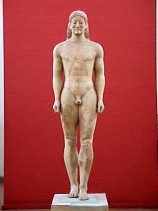
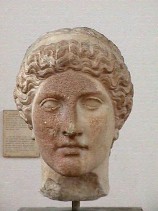
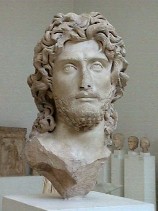
The following three sculpture pieces may be found in the National Museum in Athens, Greece. They appear in chronological order from the oldest to the most recent. Did the artists from succeeding generations learn from their predecessors?
Knowledge was the theme in Plato's Theatetus. Theatetus and Socrates had numerous discussions realted to the definition of knowledge. The ancient Greeks elevated the imporatance of knowledge in their society. To them, knowledge throuhg learning was important. They could not accept the status quo. They understood their society could only progress through change, but that change had to result from the implemetation of what they learned.
To succeed,
modern organizations need to provide the learning infrastructure
and environments necessary to develop and maintain a staff that is masterful
at interactions with each other, clients, business processes, and systems.
Many contemporary organizations faced with these problems have changed
and expanded their frame of reference from corporate training to learning
organizations. According to Thomas A. Stewart, author of Intellectual Capital, The New Wealth of Organizations,
knowledge is a conclusion drawn from data and information. Intellectual capital needs a purpose and a point of view. Formalized, captured, and leveraged
knowledge produces higher asset values.
Read the Practices section of this work for a
better understanding of the acquisition, retention, and transfer of knowledge
through education and the economy in the ancient Aegean (Greek) civilization.