

The Greeks grew crops that flourished under poor conditions such as barley, grapes, and olives. They built many administrative buildings, sanctuaries, and shops at the agora, a central meeting place for the citizens of the city state or polis. They built ships to export precious metals (silver), refined products (olive oil), and high technology goods (lamps).
Metacognition was important to the Greeks. They prospored because they acquired, retained, and transferred knowledge among themsleves in their society, with the next generation, and with their trading partners. An area where this transfer took place was the agora.
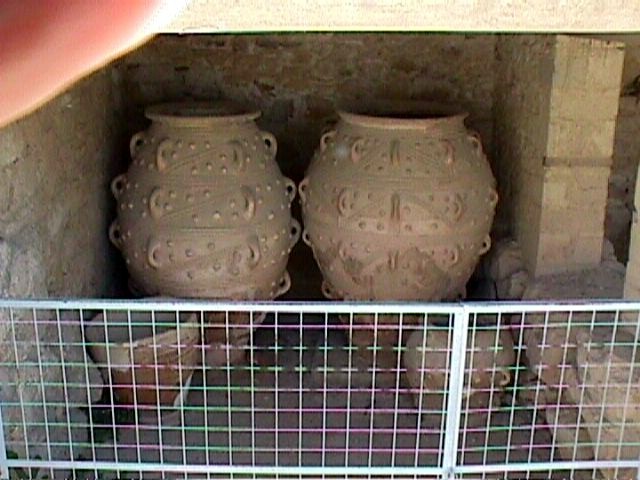
Many Greek Aegean civilizations earned currency through a lucrative olive oil trade. The Minoan (Aegean) civilization prospered during the 17th century BC. They advanced through contact with their Egyptian, Phoenician, and Mesopotamian trading partners. The Minoans used money in their economy and developed a system of accounts to track their trade transactions.
Many organizations
have a robust business curriculum, or are in the
process of building a corporate university. Examples of learning environments
include classroom learning, computer based learning on CD-ROM or the Internet,
virtual synchronous learning spaces, and employee performance support systems
(EPSS).
Read the Artifacts section of this work to better
understand the capabilities of a knowledge culture.