
![[QFK Logo]](qfklogo.GIF)
"No cultural element is so transmissible as beliefs and practices concerning diseases." - Oxford Dictionary of Antiquity
How did the Cult of Asklepios evolve? And who was Asklepios? Our first records come from Homer's Iliad. He writes about Asklepios' physician son, Machaon, and mentions the importance of physicians. "For a physician is a man more worth than many other men, both to cut out arrows and to spread gentle salves".
In Greek mythology, Asklepios, son of Apollo was the Greek healer and god. His mother was a mortal princess named Coronis. As the tale goes, Aesculapius, when grown, became so skilled in surgery and the use of medicinal plants he could even restore the dead to life. Hades, ruler of the dead, became alarmed. He complained to Zeus. Fearing that he might render all men immortal, Zeus slew Asclepius with a thunderbolt.
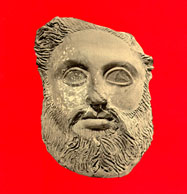
But what made this god so different? He symbolized the best of human qualities toward his followers. Unlike other gods, he avoided conflict, jealous retorts, and had compassion in an attempt heal all -- even with those whom he disagreed. Aesulapian priest-physicians also developed these attributes. The Cult of Asklepios lasted for over 1000 years. Asklepios symbolized compassion and competency that remains the cornerstones associated with and the practice of medicine today.
Members of the cult remained unparalleled in medical antiquity. In a culture of slavery dominated by economic and class distinctions, Asklepios' priest-physicians saw neither. They viewed patients with equality and compassion. Both rich and poor could spiritually unite with the god by sleeping, dreaming and praying in his temple. They also had access to his medical centers. Considered the norm today, open religious and medial access was a radical concept for 5 BC.
How does culture influence a medial diagnosis and treatment protocol?
Western medical practice evolved on the Greek Island of Epiduros. On the island, medical diagnosis shifted from observation based on divine intervention to scientific investigation. Hypocrites, known as the father of modern medicine, practiced here. Hypocrites was also an Asklepioan priest-physician. And thousands of sick came to sit under his watchful gaze at Epiduros. Priest-physicians in cult of Asklepios applied looking and listening to their patients for a medical plan. This still applies today: the art of aiding the sick begins with making the correct diagnosis. But what physicians see and how they hear is culturally based.
How can a cultural construct be used to treat patients?
My reflections on my Greek study abroad experience allowed to me review the history of Western medical diagnosis and treatment plans. I realized my own cultural bias toward alternative medical diagnosis and treatment plans. I viewed them as weird or outlandish independent medical rituals.
Once I found myself perceiving alternative attempts at folk or nonscientific medical acts often based in ignorance or superstition. And if healing occurred, it's just a result plain old good luck. I've realized this bias limits conversations by diesecting and separating a diagnosis and treatment plan from the cultural and systematic approach from which the patient emerged. Utmitaly, it limits the communication and the medical learning between patients and their caretakers. This mental separation of culture, message, and sharing knowledge could be the difference between patient compliance and medical abandonment. A diagnosis made without cultural communication perspective confuses patients and physicians, which effects the diagnosis and treatment plan.
Ths leads me to consider a cultural-based construct in the patient-physician communication. It allows for the variety of sources that offer medical access and an alternative ways to view the diagnostic process. It also involves the patient in the role of healing. As a result it also changes the patient-physician relationship cognitive relationship toward approaching a diagnosis and treatment plan.
This construct involves three overlapping medical practices:
All these diagnoses fall into the cultural communication model of formulating a medical diagnosis and treatment plan. These three forms of patient centered diagnosis existed in antient times and today. The concepts expand the idea of medicine beyond the medical office, and open the opportunity for alternative healing methods. And finally all three constructs suggest a diagnosis and treatment play that can free people from pain.