![[QFK Logo]](qfklogo.GIF)
However, when most people take a vacation they do not take advantage of the opportunity to break their patterns. If they travel, they bring their patterns with them, trying to superimpose them on the culture they are visiting. Some patterns will naturally be broken. For instance, many Americans find it strange when visiting Greece that people napped after lunch. However the fear of appearing lazy often dispels after a few days of eating intense Greek food and trying to move around in the sweltering afternoon heat. Other patterns are harder to break, and these are the ones I find interesting. We can use travel to change our way of thinking about the world and ourselves, but it does not happen automatically. Our way of thinking does not change just because we are standing in a different continent or hemisphere. This work explores several ways to use travel to transform our way of thinking.
The key to transformational travel- changing our way of thinking about ourselves and our cultures through travel- lies in the significant differences between cultures. There are many things that differentiate cultures. For instance, talking, body movements and facial expression are indications of culture. In Greece a nod of the head and the lift of the eyebrows indicates a negative response whereas in the United States, this gesture would indicate a positive response. When we travel we can compare our society's social expressions with theirs. There are even greater differences between modern and ancient cultures. Examples of this will be discussed later in the work.
The point is that learning about these significant differences between cultures and becoming enculturated (immersed in a culture) we can raise our awareness of alternate possibilities. Being aware of alternate possibilities opens up many avenues of thought. For example, we can see familiar ideas from a new perspective by comparing them with alternate possibilities. Seeing familiar ideas from a new perspective is a form of mental exercise, adding flexibility and creativity to a person's thoughts. For some people, seeing familiar ideas in a new way can even lead to transformation. Under the right circumstances, the new perspective causes them to reject the familiar idea and adopt the unfamiliar. This is learning at its best.
There are five steps to traversing the gap of understanding between different cultures and achieving transformational travel. First you have to travel somewhere. Second, you have to depend on some form of guide to familiarize yourself with the culture you are in. Third, you have to go out on your own. Fourth, you have to reflect on what you are experiencing (keep a journal). Fifth, you need to communicate with others about what you are learning by sharing ideas. It is worth noting that an approach to teaching called Cognitive Apprenticeship (developed by Collins, Duguid and Brown) follows this general approach to learning. We might call transformational learning Cultural Apprenticeship.
As you travel you are likely to meet other people with the same intentions as yourself. People traveling for themselves tend to treat other people as learners on their own journey of discovery. Which leads to the question, where are these travelers meeting? They may meet in a hotel, a hostel, an inn, a campground; anywhere travelers take time to rest and reflect upon their newly found experiences. As they reflect they will talk about their experiences, and are sure to discover others about to go to the places they have been or have been to the places others will soon go. There begins a process of influence and a meeting of the minds takes place. As society is soaked in you make connections with other travelers and they enrich you and become a part of you. These people are as much a part of your travel experience as the places you visit.
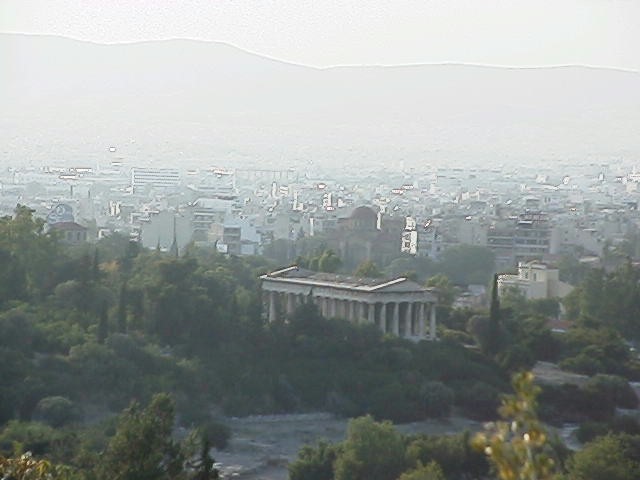
In ancient times travelers would meet in marketplaces. In an Agora, philosophers would question the meaning of life, people would be buying items, many would be drinking and conversing. It is in these places that the ancient Greeks had their own meeting of the minds. Both the hotel and the agora are similar to each other due to the nature of both places. This work will discuss how workers in a hotel interact with travelers much like the interaction of the natives and travelers in an ancient agora.