![[QFK Logo]](qfklogo.GIF)
An example of transformational travel recorded in Greek history is the Odyssey. Homer brought to us two different characters that embarked on a journey, and their travels became one of interest and self-discovery for readers. Whether or not the story began as an oral or written text is not important in this work, however it is necessary to note that it was written down at one point for many later generations to see. In turn, we all went to Ithaca, we all struggled as Odysseus fought to get home, and we all understood the problems of being young and inexperienced like Telemakhos. As we identify with the characters, we begin a learning process that began a long time ago.
Both Odysseus and Telemakhos went on a journey, but each learned something different not only about themselves, but also about the places they visited. Telemakhos' journey was one of personal maturation. By leaving his home Telemakhos made the suitors and gods give him recognition and raised the awareness of his maturation. This type of education of a young man is called a bildungsroman in Greek. Telemakhos left his sheltered life in Ithaca and this gave him a new sense of self-confidence and personal dignity. When Telemakhos meets King Menelaus he obtains news of his father and also learns about far off places like Egypt. It is through his social interactions with both Menelaus and King Nestor that Telemakhos and the reader learns what has happened in the past with his father and the Trojan War. Telemakhos is introduced to a whole new world of experience and outlook. Through the news of his father's heroism and the determination to 'be his father's son,' Telemakhos returns to Ithaca with the courage to restore order within the kingdom.
Odysseus' wanderings bring the reader to new cultures, both realistic and supernatural. His interaction with every new culture changes him and broadens his perception. For example, when Odysseus travels to the 'very edge of the world' and the dead souls rush out of Hades, Odysseus converses with many of them. From them, he is able to learn about the consequences of his departure from Ithaca and thereby devise a plan to win back the kingdom from the suitors. He also realizes the magnitude of his predicament with Poseidon, and obtains a new view of the Trojan War (given by Agamemnon). With these interactions Odysseus has heightened his frame of reference to include many different perceptions and ideas including what is important in the common experience of his people. Odysseus' wanderings also show us how it is necessary to have a great deal of self-control mixed with intellectual curiosity when traveling. When Odysseus passed through the area of the Sirens, he plugged all of his crew's ears so they would not be tempted with their beautiful song to seduce the crew to certain death. Odysseus, however, tied himself to the mast so that he could hear their song, but was unable to escape. The wanderings can be seen as evolutionary stages in the development of humanity, in the sense that as we learn about ourselves and as we learn about others, we are that much closer to having a deeper understanding of humanity as a whole.
It is through the written word that we are able to learn about Odysseus' and Telemakhos' travels and are able to form our own opinions about their journey. Both of their travels were an individual experience and since it was recorded the experience was extended to many. This act of writing enables a ripple effect. Once others learn about the experiences, thoughts, and emotions associated with the whole travel experience then they too can be transformed in a similar fashion as the author. They understand the emotions associated with the new area and are able to picture the places through the descriptive text. By reading about the travels of the characters the reader has a broader perspective of society and themselves, and it is possible that they will pass on this newfound knowledge to others.
When traveling keeping a journal is important for many reasons. First of all, it helps to remember the places visited and thoughts that occurred. Second, it is useful to reflect on the travel experience as a whole. Oftentimes we get caught up in our emotions and we fail to understand why we have the thoughts we do. When you write about it, it is easier to come to terms with yourself and your experience from an objective point of view. Third, as we learn about ourselves and other cultures through the reflection of writing, it is possible to let others join the experience by reading about our travels.
There are many methods of communication in today's society. Writing is no longer considered a "technology" as much as it was in the past. It is important to realize that in this American society literacy is at an all time high, whereas in other countries literacy is still a commodity. With this in mind, a closer look at some new technologies may enhance the overall travel experience farther than travel journal.
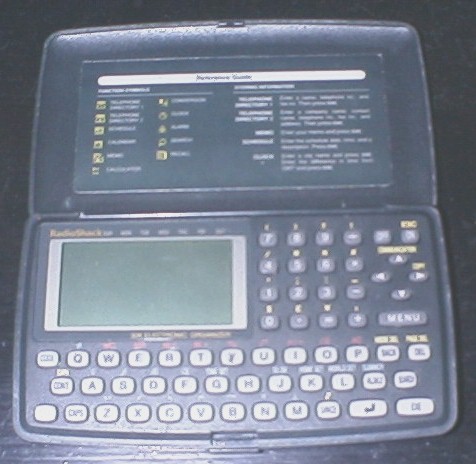
One new technology that is useful in the travel experience is the electronic notepad. Information can be recorded in a quick and efficient way. This is useful for storing telephone numbers, e-mail addresses, and quick memos on places visited. Once the information is stored it is classified into different areas and it becomes easier to retrieve the information. This handy gadget takes away the problems of small pieces of paper containing numbers, reduces the time it takes to 'look something up' in a notebook, and is small enough to fit in your pocket. Some of these notepads can also be hooked up right to your computer so the transfer of information can be as simple as a click of a key.
When traveling, information is often presented by other people in the midst of a conversation. An electronic notepad enables you store the information and retrieve it for future use. In ancient times, travelers had to memorize information received from people about future destinations. It was not convenient to write given the method of scrolls and writing utensils, and most people were not literate. When traveling, it is helpful to have an easy reference that can be shared with other travelers. For instance, when our group went to Greece I was able to tell them new information on various places we were to visit by using the notepad. I would talk to native Greeks and other tourists, learn interesting facts, and use my notepad to store the data. The use of social interaction to both receive and give information was enhanced by this new technology. The notepad became a tool through which communication and the transfer of knowledge was brought from one culture to another.
Other methods of communication are useful in transmitting the travel experience to others, and everyday new technologies are constantly being introduced in society. The written word is a mode of communication that can bring the experience to others through travel books, magazines, journals, newspapers, and letters. In order to create a realistic interpretation of a travel experience, travel writers should include their thoughts, experiences, and description of the places visited, as well as any changes that occur within themselves through their new experience. By using writing as a reflection, their travel experience may be extended to others.
Other communications can bring the travel experience to people by using the senses of sight and hearing. Film and TV are examples of this type of communication. By incorporating these senses with the written word a physical interpretation of the travel experience is shown. But there are even newer technologies that can provide sensory qualities and be used to suit individual needs.
The personal computer enables you to create a travel experience that can be very similar to "the real thing." Computer travelers are able to pick out the places they want to go, what they want to see while there, and can retrieve the images with a stroke of a key. Learning about new places through computer programs and on the internet can educate and intice others to a travel experience, yet it can also hinder the experience from occurring. Some people use the computer's resources to educate themselves on certain areas and think that once they've seen enough pictures, or read enough information they "know" that area. By using the computer to "travel" you do not receive the social interaction associated with traveling. The educational experience becomes individualistic, and takes away from authentic nature of the travel experience by turning it into a digitized version of reality. The community, the culture, the unique beauty of each town and people become lost in our point and click era. This is what separates our individual computer experience from our social traveling experience. It is important to remember these distinctions associated with traveling and the reproduction, because newer technologies are becoming available (i.e. virtual reality) and it may become harder to decipher what is reality.
The ability of the computer to generate education and global communication enhances our knowledge of other places. Although the computer may make the traveling experience individualistic, it allows people not as fortunate to travel to learn about the travel experience as a whole. Through the reflection of writing and the computer's ability to strengthen our modes of communication we are able to bring cultures and new perceptions to many. The lines of communication brought about by our current society are increasing everyday, and if we can use the technology to increase our understanding of other cultures we will have a broader understanding of our society as a whole.
I have attempted to demonstrate various ways artifacts may illustrate the theme of transformational travel. The Odyssey is a text available from ancient history that demonstrates two different experiences of transformational travel. The fact that we have the Odyssey as a text helps us understand the power of the "technology" of the written word through the impact this epic has made in history and its ability to give us insight to ancient Greek history. Through writing we are able to record, reflect, and transfer knowledge and different technologies may foster this experience. Communication, both external and internal, will bring about additional insights which is useful when traveling or when stationary. Technologies may support communication and provide education, however it is important to be aware of the difference between the reproduction and reality.
The last artifact I will present is my role in this Quest For Knowledge Summer Study Abroad Program. Originally I was weary of joining this group because I was the only undergraduate attending this graduate program. Through the scholars in this program I received an educational experience that I also supplemented. My themes were discussed and developed and links to other projects were created. I used the educational experience of my American culture in a school setting in Greece, to have a deeper understanding of the Greek culture. Through our philosophical discussions, our guides (both Greek and American), our hands on adventures, and our ability to co-exist as a group, we began a journey of discovery which provided us with insight to the Greek society and history. After our course, I left the group by myself to continue my transformational travel experience. I had an understanding of the country through my schooling and I was ready to immerse myself in the Greek love of life. I visited places not as commonly known to the tourists and stayed in Greek houses and hostels. I interacted with culture everyday without holding on to my American perceptions. By becoming immersed in the culture I opened myself up to new ideas that shape my character to this day. I learned about myself, the role society plays on the individual, the Greek spirit and mysticism, and the ability of education and experience to heighten the understanding of life and its intricacies.